The useful part first
Key takeaways
- Main sewer rodding is for shared-line blockages, not a single slow fixture.
- If wastewater is backing up, stop using water and do not keep running fixtures to recreate the problem.
- Park Forest asks residents to report backups so the public main can be checked when needed.
- A camera inspection can be useful after clearing if you want to understand the cause or pipe condition.
A common misunderstanding is assuming the nearest slow drain explains the whole problem. When wastewater shows up in several fixtures, the shared sewer line becomes the main concern. That line carries the home’s waste to the public system, so the symptom pattern matters more than which sink happened to react first.
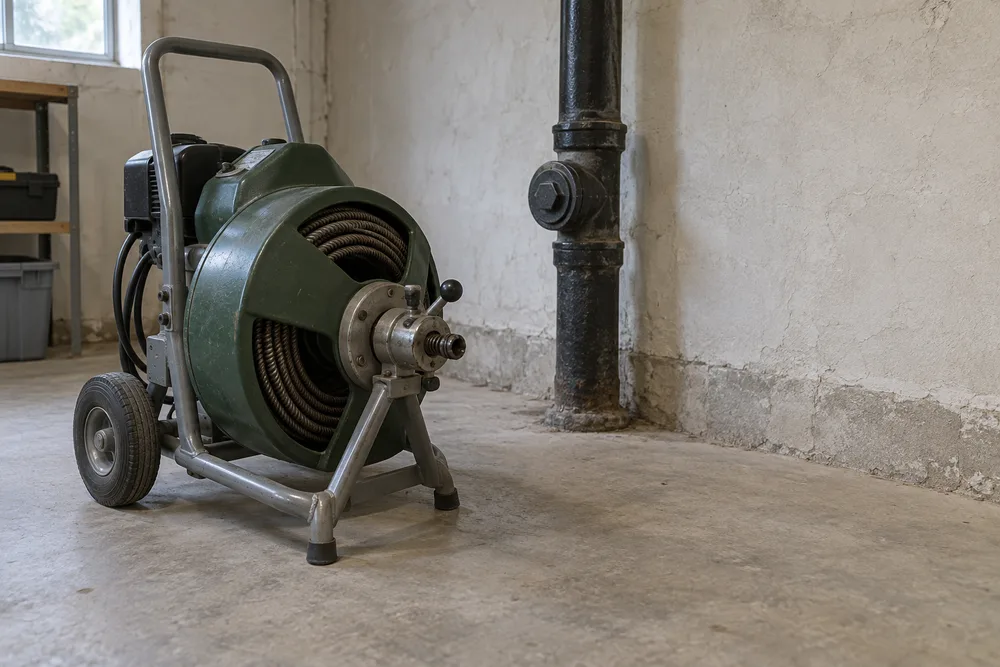
Sewer rodding is a mechanical cleaning method that can cut through soft buildup, paper, and some root intrusion in an accessible line. It is a cleaning step, not a diagnosis by itself. If you need to know whether the blockage was only cleared or whether the pipe still needs more attention, the conversation usually moves from symptoms to access, then to next steps.
Park Forest also has a local wrinkle worth knowing. The Village says residents should report backups so Public Works can check the public main, and it notes that exterior cleanout work may require permit review. If you want to understand how the referral flow works before booking, read how referrals work or the sewer-service visit guide.
What points to the main sewer line
A main-line issue usually shows up as a pattern. Several slow drains, a toilet that affects a nearby drain, or a basement floor drain that backs up during laundry discharge all suggest the shared line may be restricted. That still does not prove the blockage is in the main, but it does make main sewer rodding a sensible question to ask.
The important distinction is between one fixture and a system-wide pattern. A single bathroom sink can be clogged without touching the sewer line at all. When symptoms cross fixture boundaries, the conversation shifts to what all those drains share in common. That is where a contractor can help sort out whether the line should be rodded, inspected, or discussed in a different order.
Park Forest’s sewer guidance is useful here because it reminds residents not to assume the issue is purely private. If the symptom pattern looks like a shared-line backup, reporting it to the Village can help check whether the public main is part of the problem.
- More than one fixture is affected
- A lower drain takes water when another fixture runs
- The backup returns after a short-term fix
- The same symptom appears in different parts of the house
When it may stay inside one branch
If only one sink or tub is slow and the rest of the home behaves normally, the problem may stay inside that fixture branch. In that case, a fixture drain service may fit better than main sewer rodding. The point is not to guess from across the house, but to match the service to the symptom pattern you can actually describe.
How sewer rodding is usually scoped
The first conversation should be plain and specific. A useful scope includes which fixtures are involved, whether the backup is active, whether the line has been cleaned before, and whether there is an existing cleanout or other access point. That gives the contractor enough to decide whether rodding is likely to be useful and how the line can be reached safely.
For example, suppose the basement floor drain backs up when the washing machine drains, and the upstairs toilet burps at the same time. That pattern suggests a shared restriction somewhere in the line serving those fixtures. The contractor may still ask where the cleanout is and whether the property has had repeat issues, because access and history can change the work plan.
If you know there is a cleanout, share that location instead of trying to open anything under pressure or in the middle of an active backup. For practical preparation, see cleanout access guidance. If the line keeps returning to the same condition after clearing, recurring-clogs guidance explains why that history matters.
- Describe the symptom pattern, not just the worst fixture
- Mention prior cleaning or repeat backups
- Share any known cleanout location
- Note whether the Village has already been contacted
What rodding can and cannot tell you
Rodding can restore flow when the blockage is movable. It cannot, by itself, explain why the blockage formed or whether the pipe has a deeper condition. If roots, scale, or a shifted section are suspected, the next conversation may be about inspection once the line is open.
Water backing up now?
Pause water use and call. Emergency calls are accepted 24/7.
Where rodding fits best and where it does not
Mechanical rodding is best when the restriction can be cut through or pulled back. That includes paper buildup, soft debris, and some root intrusion. It is less helpful when the real problem is broken pipe, a separated joint, or another structural condition that cleaning alone cannot solve. In those cases, rodding may get water moving again without answering the larger question.
A contractor may suggest another approach if the line is heavily coated, greasy, or difficult to clear cleanly. Jetting can be more thorough for residue on the pipe wall, while inspection is the way to see what remains after the line is open. The best choice depends on access, the symptom pattern, and what the homeowner needs to learn from the visit, not on a preset rule.
If you want a direct comparison of the common options, the rodding and jetting guide explains the difference in plain language, and jetting service details cover the booking side without turning every blockage into a jetting job.
- Good for movable blockages in an accessible line
- May restore flow without fully cleaning pipe walls
- Does not repair damaged or misaligned pipe
- Can be followed by inspection when condition needs to be checked
Public main versus private line
Park Forest says residents should report backups so Public Works can check the public main. That matters because a backup can involve the homeowner’s line, the public main, or both. The homeowner side runs from the building drain to its connection with the public main, but the village guidance also makes clear that a public-main check may be part of the picture.
What happens during the visit
A service visit usually begins with questions about what is backing up, when it happens, and whether water use has already stopped. If wastewater is coming back up, pause water use and do not keep running fixtures to recreate the problem. That can spread sewage and make the scene harder to manage.
Once the setup is understood, the contractor checks access and starts the cleaning if rodding is appropriate. After the line opens, the next conversation may be about whether flow improved everywhere it should, whether the backup seemed localized or shared, and whether a camera inspection makes sense next. The visit process guide explains that sequence in more detail.
Plumbers 911 is operated by Plumbers Local 130. The independent contractor who accepts the referral quotes and performs the work. The referral side routes the request; the responding contractor handles the job on site.
- Expect questions about the fixtures involved
- Be ready to mention prior cleanings or repeat issues
- Stop running water during an active backup
- Follow-up inspection may be discussed after clearing
When a follow-up inspection helps
Inspection is useful when the homeowner wants to know whether roots, buildup, or a pipe condition remain after cleaning. It is also useful when the same line clogs again soon after a service call. If you are trying to learn more than whether water is moving, inspection often becomes the next practical question.
Park Forest details that affect the call
Park Forest’s sewer page gives homeowners one important instruction: report backups so the public main can be checked. That does not decide every case, but it keeps the conversation aligned with the way the system is actually managed. It is especially relevant when more than one fixture is affected or when the backup pattern does not stay neatly inside one drain.
The Village also notes that repair or new exterior cleanout work requires permit review. That matters if the work path changes from clearing to altering access or making exterior changes. Confirm the property’s current jurisdiction and requirements instead of assuming one rule applies everywhere.
If you want the handoff between your request and the contractor explained in plain terms, referral process details and about the network both help without overcomplicating the setup.
- Report suspected backups to Village Public Works when appropriate
- Do not assume one fixture symptom means a one-fixture cause
- Exterior cleanout changes may trigger permit review
- Check current jurisdiction before planning access changes
A simple decision framework
If the backup is active, stop using water and call for help. If the line is slow but still moving, ask about rodding and whether inspection should follow. If the same problem keeps returning, bring that history up early. If the Village may need to check the public main, include that in the plan from the start.
Rodding, jetting, and inspection at a glance
The three services answer different questions. Rodding clears a blockage. Jetting cleans more of the pipe wall. Inspection shows what remains and helps explain why the problem happened. A quick comparison makes it easier to ask for the right visit without turning the first call into a long diagnosis.
Service comparison
| Service | Best use | Main limitation | Typical next step |
|---|---|---|---|
| Rodding | Cutting through a blockage in the shared sewer line | Does not show hidden pipe condition by itself | Camera inspection if the cause is unclear |
| Jetting | More thorough cleaning of residue on the pipe walls | May not fit every access setup | Follow-up verification if needed |
| Inspection | Seeing what is happening inside the line | Does not clear a blockage on its own | Cleaning or repair planning based on findings |
Questions homeowners ask
Should I keep testing fixtures during a sewer backup?
No. If wastewater is backing up, pause water use and do not keep running fixtures to recreate the problem. That can spread sewage and make cleanup harder.
Does sewer rodding mean the public main is fine?
No. Rodding only addresses the line being cleaned. In Park Forest, the Village says backups should be reported so the public main can be checked when needed.
Will rodding fix every sewer problem?
No. It can clear many obstructions, but it will not repair broken pipe, offset joints, or other structural issues. Those may call for inspection and a different plan.
When should I ask about a camera inspection?
Ask after the line is open if you want to know why the blockage happened, whether roots are present, or whether the pipe condition needs a closer look. It is also useful when a clog returns after cleaning.
Do I need to know the cleanout location before I call?
No, but it helps if you do. If you know where the access is, share it. If you do not, the contractor can still discuss the setup, but do not open a backed-up cleanout yourself.
Local resources
Use these official resources for municipal or utility information. They are separate from Plumbers 911.